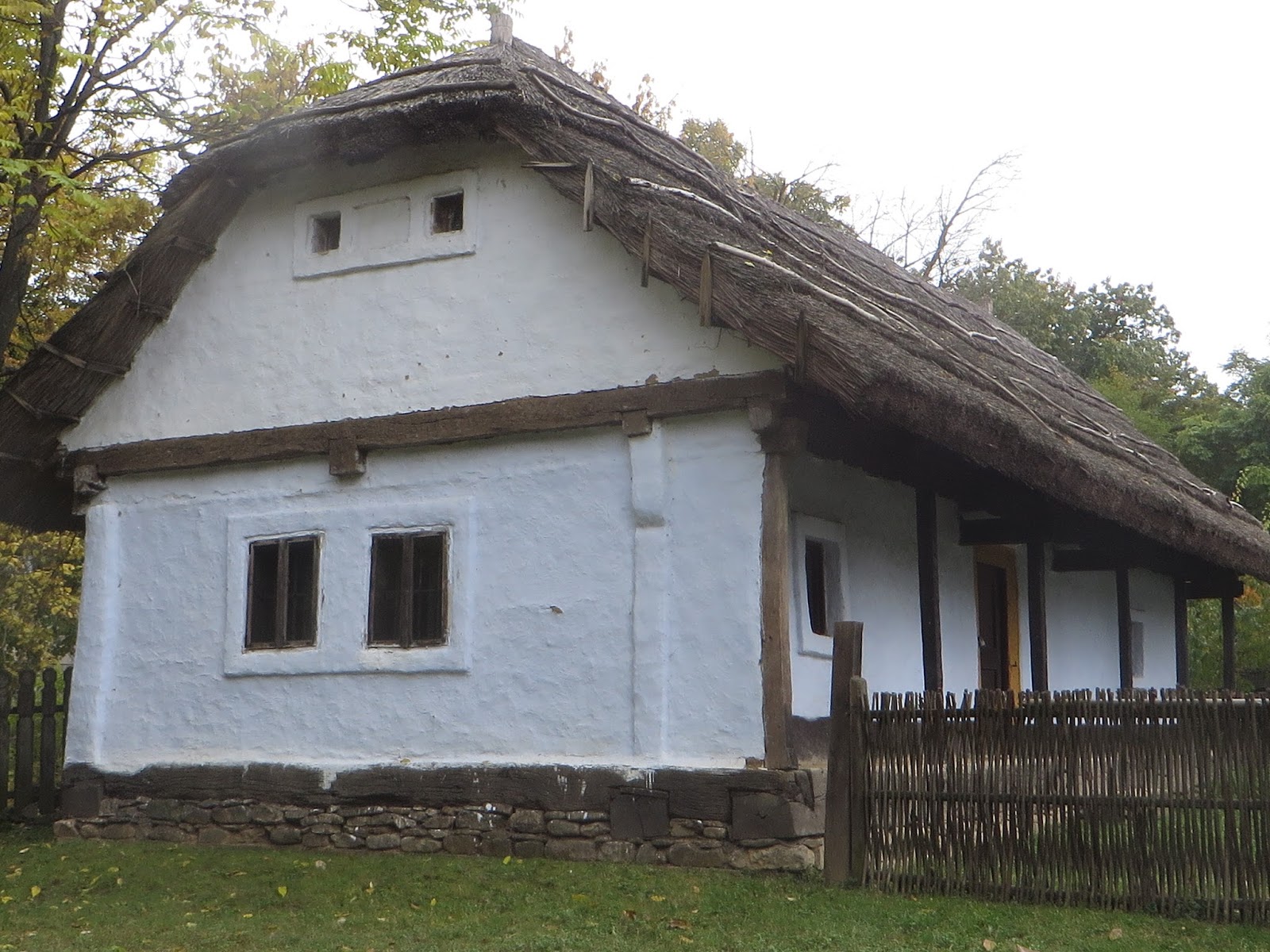
Yesterday I and my colleague, Roy Jones, had a day out with our host, Ioan Ianos chasing up some of the perhaps more bizarre developments in Bucharest over recent years. Or perhaps I should coin the term anti-developments because some were conceived by the communist dictator, Nicolae Ceausescu, who had certain megalomaniac tendencies but failed to complete many projects because of his unceremonious departure from office in 1989. Looking at them today, the only conclusion one can reach is that many were mad and / or poorly conceived and executed.


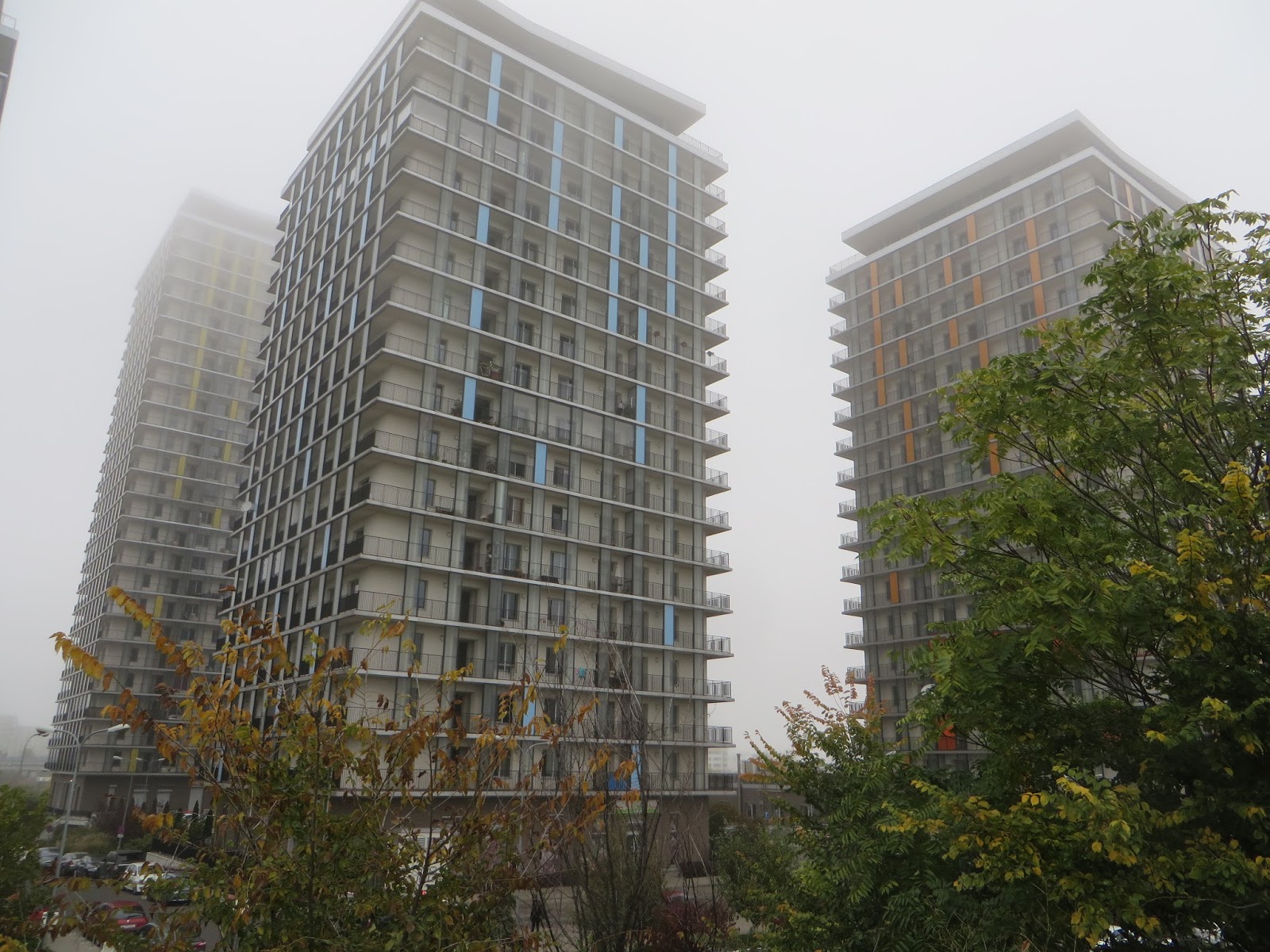
Some of the surrounding residential apartments embraced by the morning's dense fog.

A less forested bit, where we saw homeless people and their many dogs.

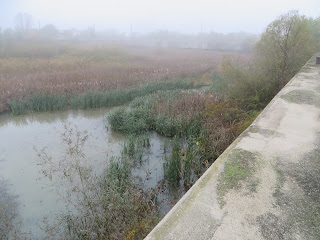
And so to Bucharest's proposed port. The city is criss-crossed by many rivers, but has no convenient access to the sea so that large vessels can dock and discharge their cargoes close by. Constanta on the Black sea is 200+ km to the east and can handle the freight, but the communist government though that it could construct an artificial port close to the capital and set about the task. It got as far as constructing the wharves shown here and digging the harbour far enough to handle reasonably large vessels. It was then swept away by revolution, work stopped, and the ridiculous scheme was shelved, leaving these fog-bound images. I suppose the dockside has one redeeming feature - as a 'road' for horse and cart:


After that excursion to the city's edge we found another more congenial experience - a grand estate of some wealthy industrial magnate, whose humungously long entrance drive was decorated by Roy (left) and Ion (right). The drive led to some large homes like those shown, the first of which - with ts extensive glasshouses - became home to the writer's guild in the communist era.


Down by the adjacent river we make out some of the homes of Bucharest's wealthy residents on the other side, and walk along its foggy banks. It was a pity that the weather was so poor because I imagine that the landscapes portrayed could have been more lively and less lugubrious when drenched by a spot of sunshine.


AS
The first stop was Văcăreşti
“Lake”. By a remarkable chance of fate I had co-written an article for an international journal, Land Use Policy, with my host Ioan, on precisely the planing of this lake, which I had never seen, and yesterday the editor alerted us to the fact that the article had been accepted for publication! So, now I am an acknowledged specialist on the subject. All I can say now, though, is that Ceausescu approved construction of a water storage dam as part of a huge scheme to supply water to the city and also channel it to avoid flooding. However he departed life on this planet before it was completed and then all hell let loose as planning systems collapsed, land was nominally returned to previous owners, governments ran out of money, bureaucratic control revolved between ministries, ecologists advocated nature reserves and so on. Thus we now have, some 27 years after the project stopped, the environmental mess shown - lots of concrete embankments, regeneration of 'forests' that even contain foxes, marshes where water puddles, homeless people in tents or metal boxes, arguments over who owns what, and a constellation for proposals for the site's use - everything from Bucharest's Disneyland to nature reserve or aesthetic parkland for the adjoining residents and industries surrounding it on all sides.


Some of the surrounding residential apartments embraced by the morning's dense fog.

And so to Bucharest's proposed port. The city is criss-crossed by many rivers, but has no convenient access to the sea so that large vessels can dock and discharge their cargoes close by. Constanta on the Black sea is 200+ km to the east and can handle the freight, but the communist government though that it could construct an artificial port close to the capital and set about the task. It got as far as constructing the wharves shown here and digging the harbour far enough to handle reasonably large vessels. It was then swept away by revolution, work stopped, and the ridiculous scheme was shelved, leaving these fog-bound images. I suppose the dockside has one redeeming feature - as a 'road' for horse and cart:


AS