My attention now turns to human habitation in the remote coastal mountains of southern Alaska and in particular three historic but geographical disconnected places, namely Juneau, Sitka and Ketchigan. Their populations are tiny, access is difficult, and yet all three played an important role in developing this region. Juneau is now Alaska's administrative capital. Sitka was the Russian capital before the Tsar sold the province off to the USA and still has numerous Russian relics, and Ketchikan was a leading commercial centre. The region has virtually no settlements outside of these places, except perhaps for Skagway which was the starting point for the Klondike gold-rush in Canada's Yukon. And the only quick way to get between these places is by flying boat or sea.
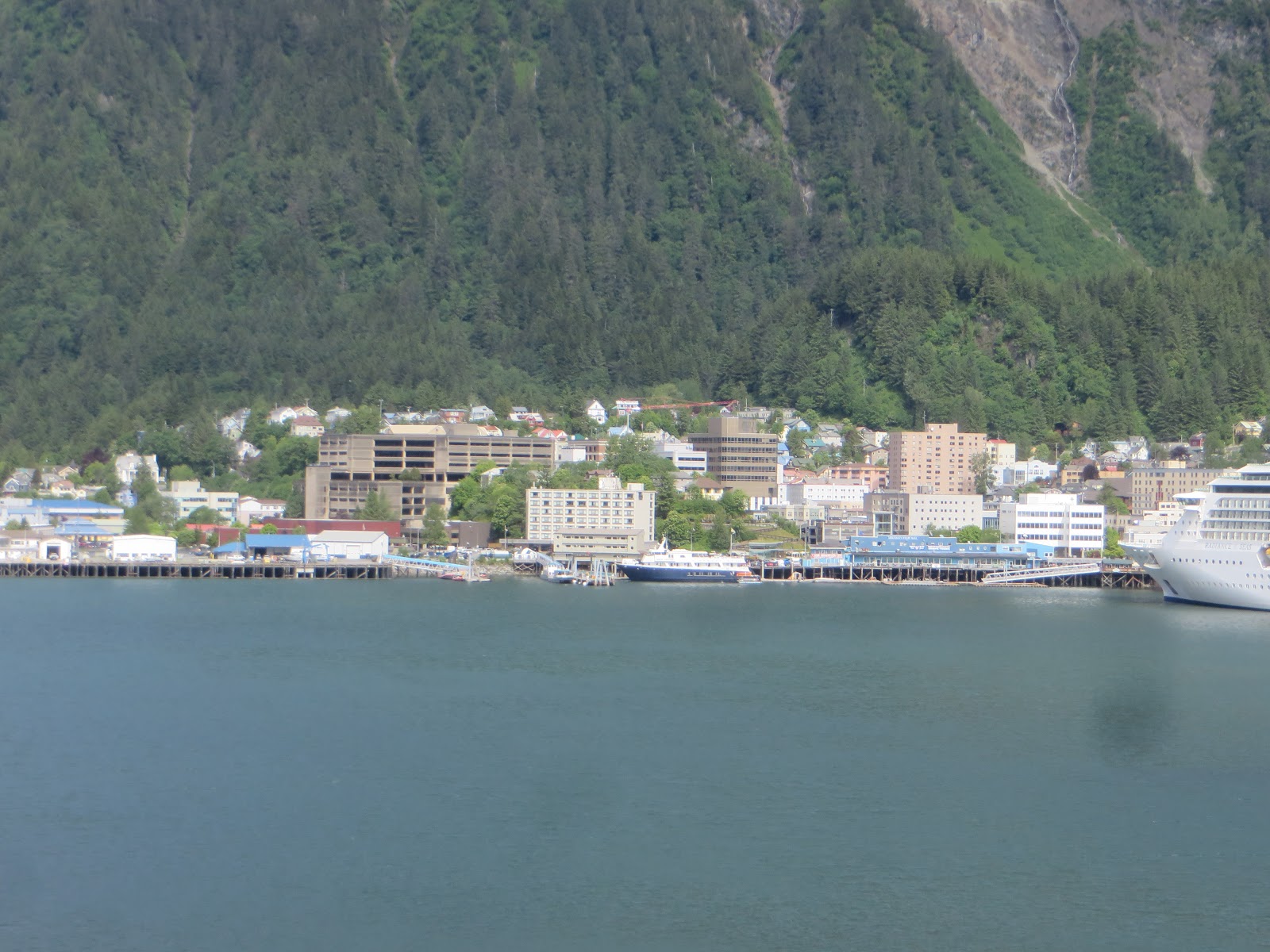
And all apart from Juneau are heavily tourism-oriented. Even there, we found a constellation of cruise vessels where we arrived, albeit on a rare sunny day!


Juneau has an interesting cable car system (known locally as a tramway!) that rapidly hauls people high up Mount Roberts with spectacular views at the summit. Given that we spent most of the time ashore at Juneau visiting a local botanical garden and viewing the Mendenhall Glacier, these following pictures of the tramway are all that I have at the city in question. By the way it was a very fast and steep journey in a huge gondola compared with the many Swiss counterparts I have used!


Returning from the Hubbard Glacier, our next port of call was Sitka which had a more beautiful ambience bestowed in particular by remnants of the Russian era. Here we are docking in Sitka, which had a vibrant little port full of pleasure craft of various kinds.


Fortunately, we had a while to wander around town before going whale watching.

This year marks the 150th anniversary of Alaska's purchase from the Russians.

The orthodox cathedral, with a black bear outside one of the many gift shops touting for tourist dollars. And nearby there was a large totem pole.


I imagine that this skin once belonged to a wolf.

One of the 'Russian' buildings and its 'plate'.


A school with a totem pole outside.

And so to Ketchigan, where we had little chance to explore the town before catching a boat to view the nearby spectacular fjords. All these views were taken from our cruise liner on a very cold, misty and wet morning.


These small places are all interesting in their way, but perhaps too touristy for my taste. I'd give first prize to Sitka for its better layout and ambience, historical associations, and more beautiful setting.
AS
And all apart from Juneau are heavily tourism-oriented. Even there, we found a constellation of cruise vessels where we arrived, albeit on a rare sunny day!

Juneau has an interesting cable car system (known locally as a tramway!) that rapidly hauls people high up Mount Roberts with spectacular views at the summit. Given that we spent most of the time ashore at Juneau visiting a local botanical garden and viewing the Mendenhall Glacier, these following pictures of the tramway are all that I have at the city in question. By the way it was a very fast and steep journey in a huge gondola compared with the many Swiss counterparts I have used!


Returning from the Hubbard Glacier, our next port of call was Sitka which had a more beautiful ambience bestowed in particular by remnants of the Russian era. Here we are docking in Sitka, which had a vibrant little port full of pleasure craft of various kinds.


Fortunately, we had a while to wander around town before going whale watching.

This year marks the 150th anniversary of Alaska's purchase from the Russians.

The orthodox cathedral, with a black bear outside one of the many gift shops touting for tourist dollars. And nearby there was a large totem pole.


I imagine that this skin once belonged to a wolf.

One of the 'Russian' buildings and its 'plate'.


A school with a totem pole outside.

And so to Ketchigan, where we had little chance to explore the town before catching a boat to view the nearby spectacular fjords. All these views were taken from our cruise liner on a very cold, misty and wet morning.


These small places are all interesting in their way, but perhaps too touristy for my taste. I'd give first prize to Sitka for its better layout and ambience, historical associations, and more beautiful setting.
AS


