I find steam trains fascinating because, I think, they remind me of my youth when I used to go train-spotting in the days of steam power and liked riding in carriages pulled by steam locomotives. I've been on many historic railways in quite a few countries where enthusiasts still keep the old tradition alive. This post is about one such journey from Strahan in Tasmania alongside Macquarie Harbour then up the Gordon River valley until about half way to Queenstown. This railway originally carried considerable mineral freight as well as passengers, but these days the traffic is mainly tourists. So here is locomotive named Mt Lyell No. 5 ready to start its journey, with Max alongside. My Lyell was the goldmine that really put a rocket under Queenstown. And here's the inside of our nicely restored coach with Dot, Max and Bec sitting in their seats on the left-hand side.


We were in the up-market carriage where lunch was served, doesn't the food look nice.
The carriage was the last in the train and had a viewing platform where I could take photos in between lunch items. And here's the line.

On the landward side we passed through farmland mostly dedicated to stock rearing - in this case mainly sheep. But as we progressed the countryside became increasingly wooded.


 And eventually we came to the picturesque Gordon River which had a considerable volume of water. The line also had many attractive cuttings like the one shown here.
 Eventually we came to the end of the tourist portion of the line where most passengers alighted to stretch the legs, admire the Gordon river and watch the engine turn around to haul us back to Strahan.

 The next stop was a misspelt place! That's just a guess on my part, but it could have been bestowed by someone with a sense of humour. The place in question is provided in this photo.


I presume that the author meant Double Barrel ... as in shotgun. Anyway we sensed that we were in no danger and alighted for a lovely walk through the rain-forests lining the banks of the Gordon.
All up, it was a delightful trip and highly recommended.
AS


We were in the up-market carriage where lunch was served, doesn't the food look nice.
The carriage was the last in the train and had a viewing platform where I could take photos in between lunch items. And here's the line.
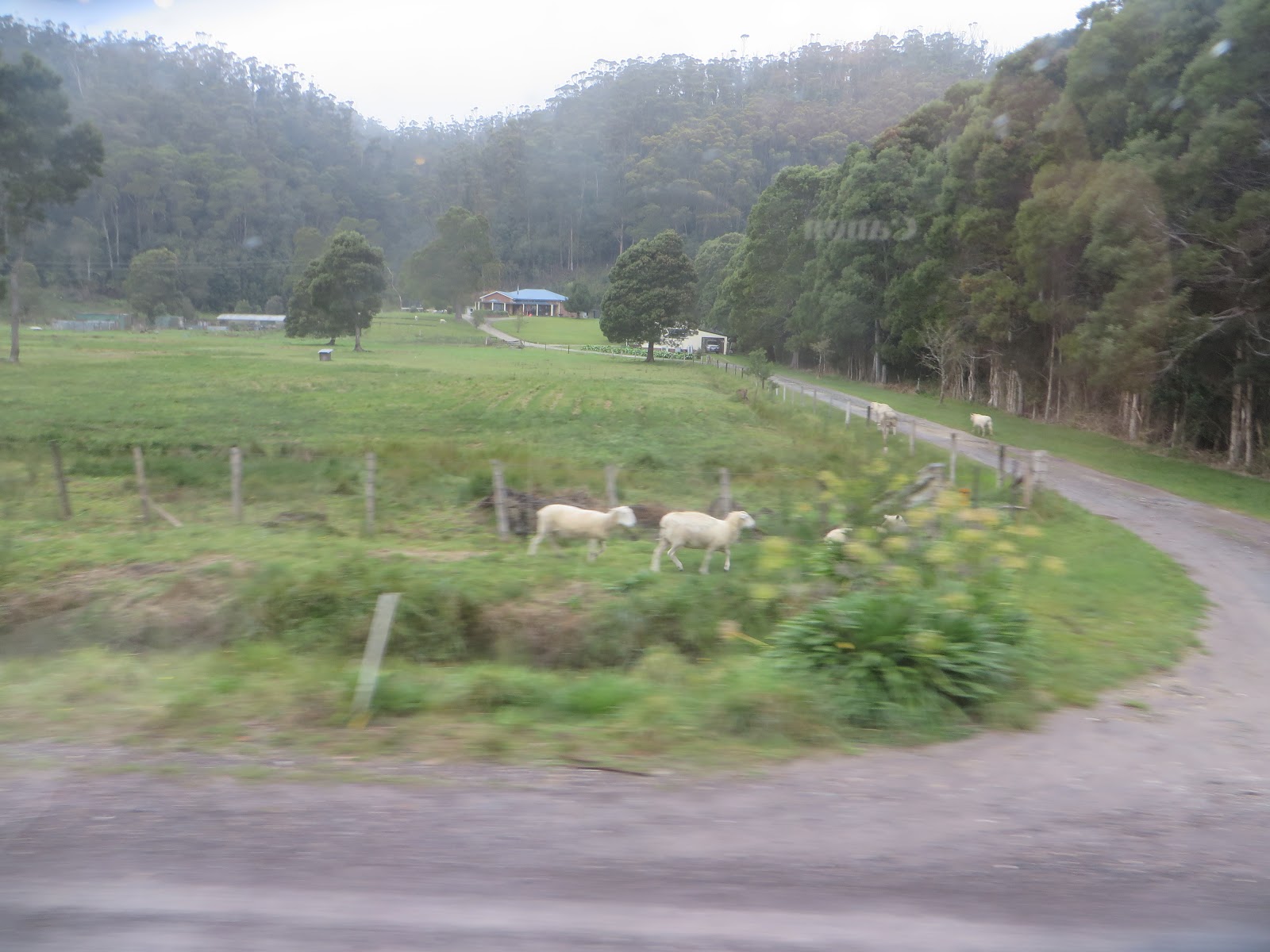
On the landward side we passed through farmland mostly dedicated to stock rearing - in this case mainly sheep. But as we progressed the countryside became increasingly wooded.


 And eventually we came to the picturesque Gordon River which had a considerable volume of water. The line also had many attractive cuttings like the one shown here.
 Eventually we came to the end of the tourist portion of the line where most passengers alighted to stretch the legs, admire the Gordon river and watch the engine turn around to haul us back to Strahan.


I presume that the author meant Double Barrel ... as in shotgun. Anyway we sensed that we were in no danger and alighted for a lovely walk through the rain-forests lining the banks of the Gordon.
All up, it was a delightful trip and highly recommended.
AS


