Thursday, 9 November 2017

A trip to the Looe

One of the things I love about visiting the UK's West Country are the beautiful Cornish fishing villages and on this occasion I couldn't resist a trip to Looe and Polperro, both located on the south coast and a few km apart. It might be late autumn now, but the two locations still sparkled on a pleasant day. The narrow winding streets with their quaint shops, cafes and pubs make for a lovely living environment, albeit thronged with hoards of noisy visitors in peak season. Likewise the views of harbours and coastlines also make these places vibrant and attractive.

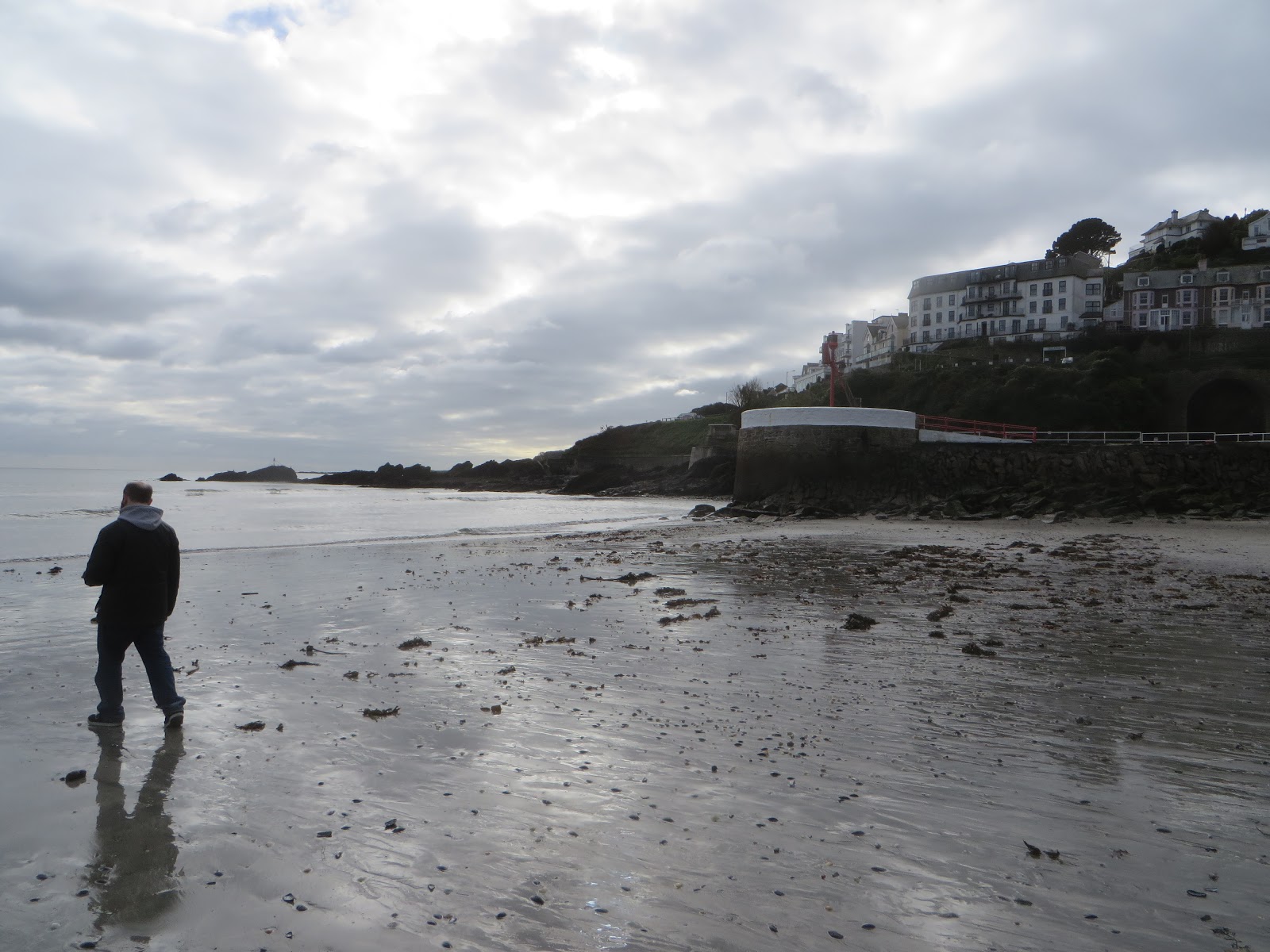
First, Looe. And a shot of one of the aggressive gulls that inhabit the place and treat both people and objects as pieces of furniture.


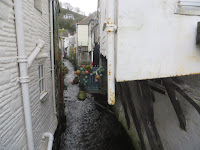
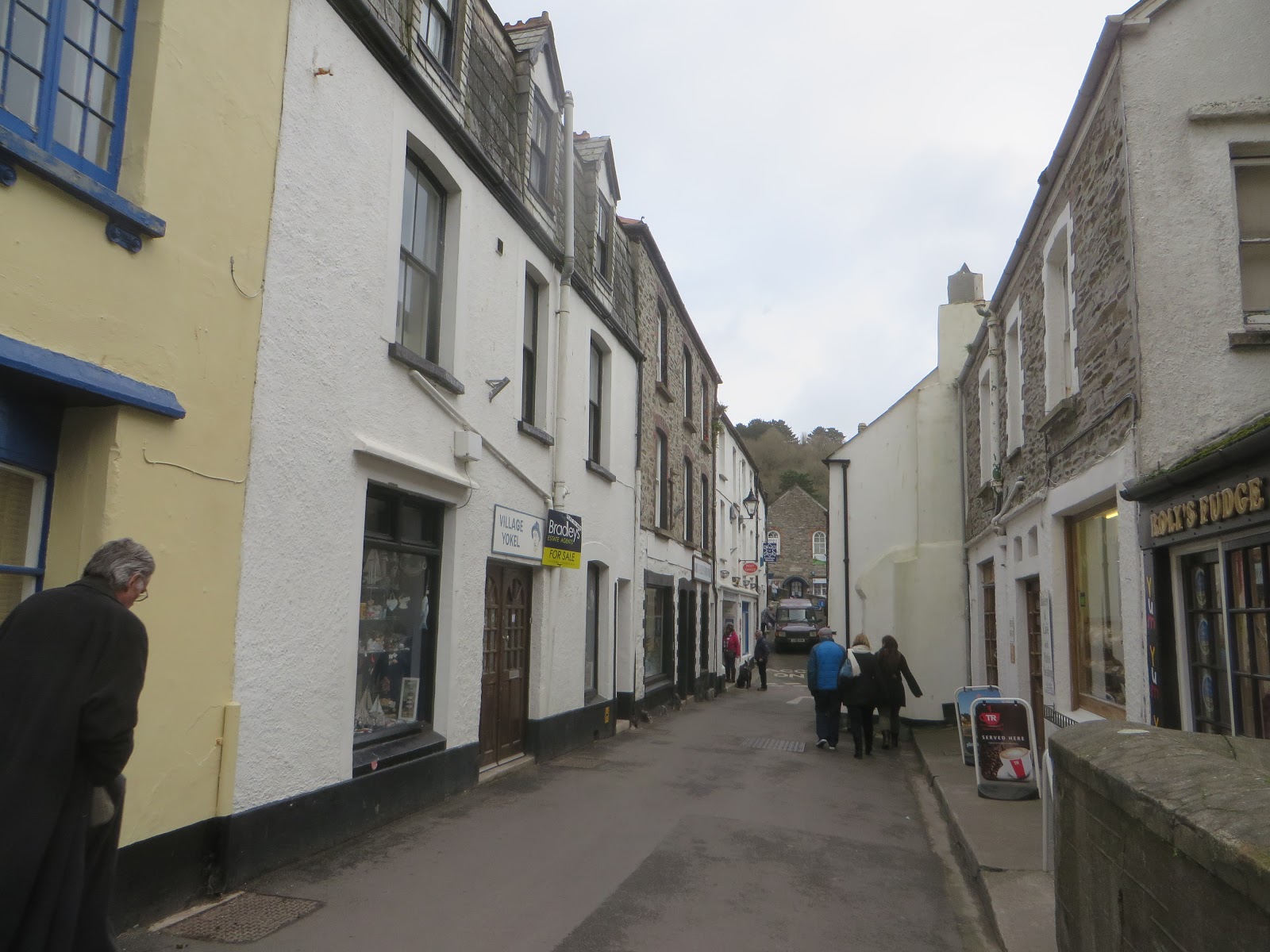
And so to the rather smaller, quaint, and quieter Polperro. But, as the pictures suggest, it's also attractive and engaging. Here we had to park our car outside of the village and walk almost a km into the centre. That's because Polperro has narrow streets and few parking spots. It also features its past life as a smuggling haven. Alas for Polperro, there's a steeply inclined little stream running through it, which tends to flood after heavy rains.


I'd recommend a visit to both places if you have a chance.

AS

Hoe Hoe Hoe: Remembering WW1

As you will see from subsequent posts, I was privileged to attend a re-enactment of one of the first world war's most significant and successful battles at Beersheba in Israel. But, when I arrived in the UK 6 days ago and travelled to Plymouth, I was surprised to find an interesting travelling display that's wending around Britain also remembering the grizzly events a century ago.

I love the city's Barbican area with its grand historic associations. There's the departure point for the Mayflower's departure to colonise what became the USA; and of course there's the Hoe where Drake played his game of bowls as the Spanish Armada sailed up the English Channel; not to forget the naval dockyards still keeping Britain secure. And my father was billeted at the fort across the harbour during WW2. Off-shore lies the real Eddystone lighthouse - not the ersatz one near Ketchikan in Alaska that I reported on some months back. And a niece of mine, Laura, now has a shop there called 'Gosh and Absolutely' selling lovely craft goods.


Anyway, as we wandered around the district and up on to the Hoe I came across a large display of ceramic red poppies commemorating the dreadful sacrifices made by the military during the war - located at the war memorial itself:


AS

Gunpowder Treason and Plot

Hail to my readers! I've been doing some amazing things just recently and now comes an avalanche of posts. However, they're not in the order of events and today's effort revolves around the 5th November 1605. That was the day on which Guy Fawkes was captured for trying to blow up the English parliament. Given the current dire nature of contemporary politics in many countries it wouldn't entirely surprise me someone tried to emulate him!!

Anyway, for the moment the Brits have only one such event to celebrate annually with pyrotechnic displays, and that was last weekend. Bonfire night, as it's also known, never ceases to amuse me. Whenever I'm in the UK at the appropriate time I'll turn out to watch and last weekend I was staying in Plympton, part of the greater Plymouth region in SW England. Amazingly, the local community came together for a truly spectacular display and hundreds of families, often with kids in tow, coughed up the 5 GBP entry fee to watch the display and it was worth every penny. The rest of this post provides some of the better pictures I took on the night.

 It was a lovely moon-lit evening, so I'll start with a picture of it. The rest of the display was a lot more colourful.


AS

Friday, 20 October 2017

Australian Light Horse v2

This afternoon Dot and went have a look at the 12th/16th Hunter River Lancers and 24th Lighthorse Memorial Museum at 174 Mann Street, Armidale. I might have lived in this town a long time, but this was the first occasion that I had visited this museum. And the passive displays were nevertheless very interesting. So we spent quite a while looking a mass of photographs and maps of various campaigns; swords, guns and other pieces of equipment; lots of medals for this that and the other going back to the 19th century; people (not real) dressed in military uniform ... and even a model horse; and other historical archives. 

And all these exhibits gave me a useful insight into the event I'm observing in 11 days time when I witness the centenary re-enactment of the highly successful Australian Lighthorse charge at Beersheba in Israel. The first World War had many disastrous military engagements with huge loss of life, but this one had relatively few participants or causalities and opened the opportunity, soon realised, of removing Turkish rule from Jerusalem in particular and Palestine in general.

And, for someone living in rural Australia, the most interesting aspects of this engagement was the fact that most participants came from places like the New England region in which we reside. Here are some of the many exhibits I took with my mobile phone, though I must admit that the lighting reflecting off the glass surrounding the exhibits made photography difficult 

The first picture shows a Waler and presumably a replica of its rider. The horses were called Walers because they were originally sold through the State of New South Wales. These hardy animals were able to travel long distances in hot weather with little water - ideal for the Middle East. Some 13,000 were used in WW1, but only one made it home in what many regard as a tragedy. Although some were dispatched because of wounds or illness, 11,000 went on India to help bolster the Raj.  


Some uniforms, excuse the lighting.


A map of the Beersheba district showing the route taken by the troops.


Images of the campaign in Palestine.


Some weapons above the door.


Wish me well on Monday week!

AS

Wednesday, 18 October 2017

Spring's Sprung

I love this time of year and especially October 2017. After one of the driest winters on record, October has been wet and the collateral 'damage' is that all the Spring flowers are rejoicing in the change of season and putting on a great show.

For those overseas I should point out that Spring in Armidale often means something rather different to European or North American experience. With the rainfall this October we've also had some remarkably high temperatures, reaching 28 degrees C (82 F) on one day, but mainly oscillating between 17 and 24 C (62 to 74 F). That's mid-summer in Britain, but here it's roughly the equivalent of the northern April.

Anyway, let the flowers display themselves. I'll only name the third from last, which I think will be unfamiliar to my readers. That's our Banksia Rose (Rosa banksiae 'lutea'), which dense masses of little yellow flowers. It took me only 5 minutes to ramble around our garden and take these pictures and much credit must go to Dot who looks after them very well. Note also our green grass. The enormous rain we've had turned brownish grass into bright green because of the warm weather and the absence of frosts.


AS

Monday, 9 October 2017

Kin Che Lam's Visit

Back in the late 1970s, Kin Che as he is universally known, was a doctoral student at the University of New England. This was in the first decade after I arrived here in Armidale, and he graduated in 1981. I knew that he was from Hong Kong and the he had returned there to a position at the Chinese University, but thereafter we had no contact until a month ago when we suddenly got a message to say that he was visiting us on campus. He had retired from his university in 2012, now holds the title of Adjunct Professor, and was visiting family in Australia ... like many Chinese, Australia seems to be high on the radar as a good place to visit, just like Elyar Sadr Mousavi migrated here a year ago from Iran, but via Malaysia.

Anyway, I and some of my colleagues had great chats with him over a couple of days restoring lost memories and sharing reminiscences. We ate out together, selecting of all places, Pablo's Mexican Restaurant. Surprisingly it turned out to be a wonderful choice as Mexican foods are not common in Hong Kong. Here we are at Pablo's taken by our waitress:


And here we are with my good colleague Prof. Neil Argent sitting outside Booloominba, the former farming mansion that was converted into UNE's administrative headquarters.


In fact, Kin Che had previously taken this good picture of me and Neil sitting inside what is effectively the UNE staff club.


This kind of event makes academic life particularly interesting - meeting people from all over the world and getting to know them. I've many international connections and only today I signed off on the final version of an article I had co-authored with two Romanians and which will be published in a leading American journal. And also today I worked on a presentation I've been invited to give in Tel Aviv on 29th October coming. I would like to think that such internationalism, if practised more widely, would help defuse what I see as rampant nationalism and increasing hatred of globalisation.

Fortunately, Australia and New Zealand are relative havens of peace on this front. And small towns like ours are competing to become home to our large intake of refugees. Most people here seem to be celebrating the arrival of 200 Syrian refugees here in Armidale early next year! And Australia's population is rising fast from immigrants. When I arrived here in 1971 the country's population was 13 million. It's now officially 24.5 million! And most rapidly integrate into Australian society.

AS